
Showing posts with label Reads. Show all posts
Showing posts with label Reads. Show all posts
Tuesday, October 4, 2011
LESBIAN READING
IF YOUR A NEW OR OLD LESBIAN AND HAVE NEVER READ THIS BOOK I WOULD SUGGEST GIVING IT A WHIRL. I'M NOT A LESBIAN BUT I THOUGHT IT WAS HEART FELT AND SWEET ALL THE SAME.


Tuesday, July 19, 2011
William Burroughs’ curse on Truman Capote via' Dangerous Minds'

After setting up the backstory with anecdotes involving the mutual distaste that Burroughs (who apparently disliked effeminate homosexuals) felt for Capote (who might have snubbed Burroughs with Tennessee Williams and Paul Bowles in Tangier), Robinson relates the tale of a “curse” Burroughs placed on Capote’s literary talents in the form of an extraordinarily spiteful two-page “Open Letter to Truman Capote,” a copy of which now resides in the
Burroughs’ “letter” begins with an explanation to Capote that his “is not a fan letter in the usual sense.” Acting as spokesman for a “department” with apparent responsibility for determining writers’ fates, Burroughs announces that he has followed Capote’s “literary development from its inception” and, in the line of duty, has conducted exhaustive inquiries comparable to those undertaken by Capote in his research for In Cold Blood. An engagingly surreal touch finds Burroughs reporting that these inquiries have included interviewing all of Capote’s fictional characters “beginning with Miriam” (the title character of Capote’s breakthrough story of 1945). Referring to “the recent exchange of genialities” between Capote and Kenneth Tynan, Burroughs concludes that Tynan “was much too lenient.” Going one step further than Tynan and accusing Capote of acting as an apologist for hard-line methods of police interrogation (and thus supporting those “who are turning America into a police state”), Burroughs next turns to the question of Capote’s writing abilities. Avowing that Capote’s early short stories were “in some respects promising,” Burroughs suggests Capote could have made positive use of his talents, presumably by applying them to the expansion of human consciousness (“You were granted an area for psychic development”). Instead, Burroughs finds that Capote has sold out a talent “that is not yours to sell.” In retribution for having misused “the talent that was granted you by this department”, Burroughs starkly warns “That talent is now officially withdrawn,” signing off with the sinister admonition, “You will never have anything else. You will never write another sentence above the level of In Cold Blood. As a writer you are finished.”
It should be noted that, at the time of writing, Burroughs was a credulous believer in the efficacy of curses (famously believing he had successfully used tape recorders to close down a London restaurant where he had received bad service). Regardless of how seriously Burroughs intended his prediction for Capote’s future, his words proved eerily prescient. After the publication of In Cold Blood, Capote announced work on an epic novel entitled Answered Prayers, intended as a Proustian summation of the high society world to which he had enjoyed privileged access over the previous decades. The slim existing contents were eventually published posthumously while one of the few extracts which saw publication within Capote’s lifetime notoriously employed Capote’s habit of indiscretion to disastrous effect. When “La Côte Basque, 1965″ was published by Esquire in 1975, Capote’s betrayal of the confidences of friends (who recognized the identities lurking beneath the veneer of fictionalized characters) resulted in swift exile from the celebrity world which Capote had courted for much of his career.
Given Burroughs’ curse on Capote, it is interesting to note that, in the years before his death, Capote’s dismissive views on Burroughs’ work became even more damning: “Norman Mailer thinks William Burroughs is a genius, which I think is ludicrous beyond words. I don’t think William Burroughs has an ounce of talent.” By the time these remarks were recorded by Lawrence Grobel in Conversations with Capote, successful canvassing by Mailer among others had resulted in Burroughs’ admission to the American Academy and Institute of Arts and Letters in 1983. After a long decline, wrought by the inability to break a harrowing cycle of alcohol and barbiturate abuse, Capote died the following year at the age of 59.
In Cold Blood: William Burroughs’ Curse on Truman Capote (Reality Studio)
Thank you Celia Rimell
Sunday, July 10, 2011


Saturday, July 9, 2011
FIRST LADY BETTY FORD DIES AT 93
FORMER FIRST LADY BETTY FORD HAS PASSED AWAY AT 93. FOR THOSE OF YOU WHO MAY NOT BE PRIVY TO HER CONTRIBUTIONS TO THIS NATION YOU SHOULD KNOW FIRST OFF THAT NOT ONLY WAS SHE A STAUNCH ADVOCATE FOR ABORTION RIGHTS, BREAST CANCER AND A SAVIOR 90'000 PEOPLE WHO SUFFERED FROM DRUG AND ALCOHOL ABUSE BUT SHE WAS ALSO OPEN TO MARIJUANA USE....
SHE DISPLAYED ALMOST LIKE NO OTHER FIRST LADY THE BRAZEN CHARACTERISTICS OF A NATION THAT OFTEN TIMES FORGETS THE VALUE OF HONESTY, DIGNITY AND THE LEMON TO LEMON AID APPROACH . THIS FORMER MARTHA GRAHAM DANCER AND GREENWICH VILLAGE RESIDENT WAS A TRUE TRAIL BLAZER AND SHE DID IT WITH CLASS AND NO APOLOGIES . RIP BETTY. GOD BLESS YOU AND OUR IMPERFECT NATION♥ (following article by AP press)

LOS ANGELES (AP) — Betty Ford said things that first ladies just don't say, even today. And 1970s America loved her for it.
According to Mrs. Ford, her young adult children probably had smoked marijuana — and if she were their age, she'd try it, too. She told "60 Minutes" she wouldn't be surprised to learn that her youngest, 18-year-old Susan, was in a sexual relationship (an embarrassed Susan issued a denial).
She mused that living together before marriage might be wise, thought women should be drafted into the military if men were, and spoke up unapologetically for abortion rights, taking a position contrary to the president's. "Having babies is a blessing, not a duty," Mrs. Ford said.
The former first lady, whose triumph over drug and alcohol addiction became a beacon of hope for addicts and the inspiration for her Betty Ford Center in California, died at age 93, family friend Marty Allen said.
Family spokeswoman Barbara Lewandrowski said Betty Ford died Friday at the Eisenhower Medical Center in Rancho Mirage. Other details of her death were not immediately available.
"She was a wonderful wife and mother; a great friend; and a courageous First Lady," former President George H.W. Bush said in a statement on Friday. "No one confronted life's struggles with more fortitude or honesty, and as a result, we all learned from the challenges she faced."
While her husband served as president, Betty Ford's comments weren't the kind of genteel, innocuous talk expected from a first lady, and a Republican one no less. Her unscripted comments sparked tempests in the press and dismayed President Gerald Ford's advisers, who were trying to soothe the national psyche after Watergate. But to the scandal-scarred, Vietnam-wearied, hippie-rattled nation, Mrs. Ford's openness was refreshing.
Candor worked for Betty Ford, again and again. She would build an enduring legacy by opening up the toughest times of her life as public example.
In an era when cancer was discussed in hushed tones and mastectomy was still a taboo subject, the first lady shared the specifics of her breast cancer surgery. The publicity helped bring the disease into the open and inspired countless women to seek breast examinations.
Her most painful revelation came 15 months after leaving the White House, when Mrs. Ford announced that she was entering treatment for a longtime addiction to painkillers and alcohol. It turned out the famously forthcoming first lady had been keeping a secret, even from herself.
She used the unvarnished story of her own descent and recovery to crusade for better addiction treatment, especially for women. She co-founded the nonprofit Betty Ford Center near the Fords' home in Rancho Mirage, Calif., in 1982. Mrs. Ford raised millions of dollars for the center, kept close watch over its operations, and regularly welcomed groups of new patients with a speech that started, "Hello, my name's Betty Ford, and I'm an alcoholic and drug addict."
Although most famous for a string of celebrity patients over the years — from Elizabeth Taylor and Johnny Cash to Lindsay Lohan — the center keeps its rates relatively affordable and has served more than 90,000 people.
"People who get well often say, 'You saved my life,' and 'You've turned my life around,'" Mrs. Ford once said. "They don't realize we merely provided the means for them to do it themselves, and that's all."
In a statement Friday, President Barack Obama said the Betty Ford Center would honor Mrs. Ford's legacy "by giving countless Americans a new lease on life."
"As our nation's First Lady, she was a powerful advocate for women's health and women's rights," the president said. "After leaving the White House, Mrs. Ford helped reduce the social stigma surrounding addiction and inspired thousands to seek much-needed treatment."
Mrs. Ford was a free spirit from the start. Elizabeth Bloomer, born April 8, 1918, fell in love with dance as a girl in Grand Rapids, Mich., and decided it would be her life. At 20, despite her mother's misgivings, she moved to New York to learn from her idol Martha Graham. She lived in Greenwich Village, worked as a model, and performed at Carnegie Hall in Graham's modern dance ensemble. "I thought I had arrived," she later recalled.
But her mother coaxed her back to Grand Rapids, where Betty worked as a dance teacher and store fashion coordinator and married William Warren, a friend from school days. He was a salesman who traveled frequently; she was unhappy. They lasted five years.
While waiting for her divorce to become final, she met and began dating, as she put it in her memoir, "probably the most eligible bachelor in Grand Rapids" — former college football star, Navy veteran and lawyer Jerry Ford. They would be married for 58 years, until his death in December 2006.
When he proposed, she didn't know about his political ambitions; when he launched his bid for Congress during their engagement, she figured he couldn't win.
Two weeks after their October 1948 wedding, her husband was elected to his first term in the House. He would serve 25 years, rising to minority leader.
Mrs. Ford was thrust into a role she found exhausting and unfulfilling: political housewife. While her husband campaigned for weeks at a time or worked late on Capitol Hill, she raised their four children: Michael, Jack, Steven and Susan. She arranged luncheons for congressional wives, helped with her husband's campaigns, became a Cub Scout den mother, taught Sunday school.
A pinched nerve in her neck in 1964, followed by the onset of severe osteoarthritis, led her to an assortment of prescription drugs that never fully relieved the pain. For years she had been what she later called "a controlled drinker, no binges." Now she began mixing pills and alcohol. Feeling overwhelmed and underappreciated, she suffered an emotional breakdown that led to weekly visits with a psychiatrist.
The psychiatrist didn't take note of her drinking but instead tried to build her self-esteem: "He said I had to start thinking I was valuable, not just as a wife and mother, but as myself."
The White House would give her that gift.
In 1973, as Mrs. Ford was happily anticipating her husband's retirement from politics, Vice President Spiro Agnew was forced out of office over bribery charges. President Richard Nixon turned to Gerald Ford to fill the office.
Less than a year later, his presidency consumed by the Watergate scandal, Nixon resigned. On Aug. 9, 1974, Gerald Ford was sworn in as the only chief executive in American history who hadn't been elected either president or vice president.
Mrs. Ford wrote of her sudden ascent to first lady: "It was like going to a party you're terrified of, and finding out to your amazement that you're having a good time."
She was 56 when she moved into the White House, and looked more matronly than mod. Ever gracious, her chestnut hair carefully coifed into a soft bouffant, she tended to speak softly and slowly, even when taking a feminist stand.
Her breast cancer diagnosis, coming less than two months after President Ford was whisked into office, may have helped disarm the clergymen, conservative activists and Southern politicians who were most inflamed by her loose comments. She was photographed recovering at Bethesda Naval Hospital, looking frail in her robe, and won praise for grace and courage.
"She seems to have just what it takes to make people feel at home in the world again," media critic Marshall McLuhan observed at the time. "Something about her makes us feel rooted and secure — a feeling we haven't had in a while. And her cancer has been a catharsis for everybody."
The public outpouring of support helped her embrace the power of her position. "I was somebody, the first lady," she wrote later. "When I spoke, people listened."
She used her newfound influence to lobby aggressively for the Equal Rights Amendment, which failed nonetheless, and to speak against child abuse, raise money for handicapped children, and champion the performing arts.
It's debatable whether Mrs. Ford's frank nature helped or hurt her husband's 1976 campaign to win a full term as president. Polls showed she was widely admired. By taking positions more liberal than the president's, she helped broaden his appeal beyond traditional Republican voters. But she also outraged some conservatives, leaving the president more vulnerable to a strong GOP primary challenge by Ronald Reagan. That battle weakened Ford going into the general election against Democrat Jimmy Carter.
Carter won by a slim margin. The president had lost his voice in the campaign's final days, and it was Mrs. Ford who read his concession speech to the nation.
The Fords retired to a Rancho Mirage golf community, but he spent much of his time away, giving speeches and playing in golf tournaments. Home alone, deprived of her exciting and purposeful life in the White House, Mrs. Ford drank.
By 1978 her secret was obvious to those closest to her.
"As I got sicker," she recalled, "I gradually stopped going to lunch. I wouldn't see friends. I was putting everyone out of my life." Her children recalled her living in a stupor, shuffling around in her bathrobe, refusing meals in favor of a drink.
Her family finally confronted her and insisted she seek treatment.
"I was stunned at what they were trying to tell me about how I disappointed them and let them down," she said in a 1994 Associated Press interview. "I was terribly hurt — after I had spent all those years trying to be the best mother, wife I could be. ... Luckily, I was able to hear them saying that I needed help and they cared too much about me to let it go on."
She credited their "intervention" with saving her life.
Mrs. Ford entered Long Beach Naval Hospital and, alongside alcoholic young sailors and officers, underwent a grim detoxification that became the model for therapy at the Betty Ford Center. In her book "A Glad Awakening," she described her recovery as a second chance at life.
And in that second chance, she found a new purpose.
"There is joy in recovery," she wrote, "and in helping others discover that joy."
Family spokeswoman Lewandrowski the family expects to organize a service in Palm Desert over the next couple days. Ford's body will be sent to Michigan for burial alongside former President Gerald Ford, who is buried at his namesake museum in Grand Rapids.
___
SHE DISPLAYED ALMOST LIKE NO OTHER FIRST LADY THE BRAZEN CHARACTERISTICS OF A NATION THAT OFTEN TIMES FORGETS THE VALUE OF HONESTY, DIGNITY AND THE LEMON TO LEMON AID APPROACH . THIS FORMER MARTHA GRAHAM DANCER AND GREENWICH VILLAGE RESIDENT WAS A TRUE TRAIL BLAZER AND SHE DID IT WITH CLASS AND NO APOLOGIES . RIP BETTY. GOD BLESS YOU AND OUR IMPERFECT NATION♥ (following article by AP press)

LOS ANGELES (AP) — Betty Ford said things that first ladies just don't say, even today. And 1970s America loved her for it.
According to Mrs. Ford, her young adult children probably had smoked marijuana — and if she were their age, she'd try it, too. She told "60 Minutes" she wouldn't be surprised to learn that her youngest, 18-year-old Susan, was in a sexual relationship (an embarrassed Susan issued a denial).
She mused that living together before marriage might be wise, thought women should be drafted into the military if men were, and spoke up unapologetically for abortion rights, taking a position contrary to the president's. "Having babies is a blessing, not a duty," Mrs. Ford said.
The former first lady, whose triumph over drug and alcohol addiction became a beacon of hope for addicts and the inspiration for her Betty Ford Center in California, died at age 93, family friend Marty Allen said.
Family spokeswoman Barbara Lewandrowski said Betty Ford died Friday at the Eisenhower Medical Center in Rancho Mirage. Other details of her death were not immediately available.
"She was a wonderful wife and mother; a great friend; and a courageous First Lady," former President George H.W. Bush said in a statement on Friday. "No one confronted life's struggles with more fortitude or honesty, and as a result, we all learned from the challenges she faced."
While her husband served as president, Betty Ford's comments weren't the kind of genteel, innocuous talk expected from a first lady, and a Republican one no less. Her unscripted comments sparked tempests in the press and dismayed President Gerald Ford's advisers, who were trying to soothe the national psyche after Watergate. But to the scandal-scarred, Vietnam-wearied, hippie-rattled nation, Mrs. Ford's openness was refreshing.
Candor worked for Betty Ford, again and again. She would build an enduring legacy by opening up the toughest times of her life as public example.
In an era when cancer was discussed in hushed tones and mastectomy was still a taboo subject, the first lady shared the specifics of her breast cancer surgery. The publicity helped bring the disease into the open and inspired countless women to seek breast examinations.
Her most painful revelation came 15 months after leaving the White House, when Mrs. Ford announced that she was entering treatment for a longtime addiction to painkillers and alcohol. It turned out the famously forthcoming first lady had been keeping a secret, even from herself.
She used the unvarnished story of her own descent and recovery to crusade for better addiction treatment, especially for women. She co-founded the nonprofit Betty Ford Center near the Fords' home in Rancho Mirage, Calif., in 1982. Mrs. Ford raised millions of dollars for the center, kept close watch over its operations, and regularly welcomed groups of new patients with a speech that started, "Hello, my name's Betty Ford, and I'm an alcoholic and drug addict."
Although most famous for a string of celebrity patients over the years — from Elizabeth Taylor and Johnny Cash to Lindsay Lohan — the center keeps its rates relatively affordable and has served more than 90,000 people.
"People who get well often say, 'You saved my life,' and 'You've turned my life around,'" Mrs. Ford once said. "They don't realize we merely provided the means for them to do it themselves, and that's all."
In a statement Friday, President Barack Obama said the Betty Ford Center would honor Mrs. Ford's legacy "by giving countless Americans a new lease on life."
"As our nation's First Lady, she was a powerful advocate for women's health and women's rights," the president said. "After leaving the White House, Mrs. Ford helped reduce the social stigma surrounding addiction and inspired thousands to seek much-needed treatment."
Mrs. Ford was a free spirit from the start. Elizabeth Bloomer, born April 8, 1918, fell in love with dance as a girl in Grand Rapids, Mich., and decided it would be her life. At 20, despite her mother's misgivings, she moved to New York to learn from her idol Martha Graham. She lived in Greenwich Village, worked as a model, and performed at Carnegie Hall in Graham's modern dance ensemble. "I thought I had arrived," she later recalled.
But her mother coaxed her back to Grand Rapids, where Betty worked as a dance teacher and store fashion coordinator and married William Warren, a friend from school days. He was a salesman who traveled frequently; she was unhappy. They lasted five years.
While waiting for her divorce to become final, she met and began dating, as she put it in her memoir, "probably the most eligible bachelor in Grand Rapids" — former college football star, Navy veteran and lawyer Jerry Ford. They would be married for 58 years, until his death in December 2006.
When he proposed, she didn't know about his political ambitions; when he launched his bid for Congress during their engagement, she figured he couldn't win.
Two weeks after their October 1948 wedding, her husband was elected to his first term in the House. He would serve 25 years, rising to minority leader.
Mrs. Ford was thrust into a role she found exhausting and unfulfilling: political housewife. While her husband campaigned for weeks at a time or worked late on Capitol Hill, she raised their four children: Michael, Jack, Steven and Susan. She arranged luncheons for congressional wives, helped with her husband's campaigns, became a Cub Scout den mother, taught Sunday school.
A pinched nerve in her neck in 1964, followed by the onset of severe osteoarthritis, led her to an assortment of prescription drugs that never fully relieved the pain. For years she had been what she later called "a controlled drinker, no binges." Now she began mixing pills and alcohol. Feeling overwhelmed and underappreciated, she suffered an emotional breakdown that led to weekly visits with a psychiatrist.
The psychiatrist didn't take note of her drinking but instead tried to build her self-esteem: "He said I had to start thinking I was valuable, not just as a wife and mother, but as myself."
The White House would give her that gift.
In 1973, as Mrs. Ford was happily anticipating her husband's retirement from politics, Vice President Spiro Agnew was forced out of office over bribery charges. President Richard Nixon turned to Gerald Ford to fill the office.
Less than a year later, his presidency consumed by the Watergate scandal, Nixon resigned. On Aug. 9, 1974, Gerald Ford was sworn in as the only chief executive in American history who hadn't been elected either president or vice president.
Mrs. Ford wrote of her sudden ascent to first lady: "It was like going to a party you're terrified of, and finding out to your amazement that you're having a good time."
She was 56 when she moved into the White House, and looked more matronly than mod. Ever gracious, her chestnut hair carefully coifed into a soft bouffant, she tended to speak softly and slowly, even when taking a feminist stand.
Her breast cancer diagnosis, coming less than two months after President Ford was whisked into office, may have helped disarm the clergymen, conservative activists and Southern politicians who were most inflamed by her loose comments. She was photographed recovering at Bethesda Naval Hospital, looking frail in her robe, and won praise for grace and courage.
"She seems to have just what it takes to make people feel at home in the world again," media critic Marshall McLuhan observed at the time. "Something about her makes us feel rooted and secure — a feeling we haven't had in a while. And her cancer has been a catharsis for everybody."
The public outpouring of support helped her embrace the power of her position. "I was somebody, the first lady," she wrote later. "When I spoke, people listened."
She used her newfound influence to lobby aggressively for the Equal Rights Amendment, which failed nonetheless, and to speak against child abuse, raise money for handicapped children, and champion the performing arts.
It's debatable whether Mrs. Ford's frank nature helped or hurt her husband's 1976 campaign to win a full term as president. Polls showed she was widely admired. By taking positions more liberal than the president's, she helped broaden his appeal beyond traditional Republican voters. But she also outraged some conservatives, leaving the president more vulnerable to a strong GOP primary challenge by Ronald Reagan. That battle weakened Ford going into the general election against Democrat Jimmy Carter.
Carter won by a slim margin. The president had lost his voice in the campaign's final days, and it was Mrs. Ford who read his concession speech to the nation.
The Fords retired to a Rancho Mirage golf community, but he spent much of his time away, giving speeches and playing in golf tournaments. Home alone, deprived of her exciting and purposeful life in the White House, Mrs. Ford drank.
By 1978 her secret was obvious to those closest to her.
"As I got sicker," she recalled, "I gradually stopped going to lunch. I wouldn't see friends. I was putting everyone out of my life." Her children recalled her living in a stupor, shuffling around in her bathrobe, refusing meals in favor of a drink.
Her family finally confronted her and insisted she seek treatment.
"I was stunned at what they were trying to tell me about how I disappointed them and let them down," she said in a 1994 Associated Press interview. "I was terribly hurt — after I had spent all those years trying to be the best mother, wife I could be. ... Luckily, I was able to hear them saying that I needed help and they cared too much about me to let it go on."
She credited their "intervention" with saving her life.
Mrs. Ford entered Long Beach Naval Hospital and, alongside alcoholic young sailors and officers, underwent a grim detoxification that became the model for therapy at the Betty Ford Center. In her book "A Glad Awakening," she described her recovery as a second chance at life.
And in that second chance, she found a new purpose.
"There is joy in recovery," she wrote, "and in helping others discover that joy."
Family spokeswoman Lewandrowski the family expects to organize a service in Palm Desert over the next couple days. Ford's body will be sent to Michigan for burial alongside former President Gerald Ford, who is buried at his namesake museum in Grand Rapids.
___
Friday, July 8, 2011
The Monkey Who Moved to Manhattan

At the top of my list of all-time classic factoids is the one about how chimpanzees and humans share 98.7 percent of their DNA. This is a thrilling factoid: just counterintuitive enough and yet paradigm-shifting—simultaneously humbling (we’re basically not different from monkeys) and hilarious (imagine one of them wearing a suit and tie). Most importantly, it makes you wonder about that last 1.3 percent, and that’s the itch Elizabeth Hess tries to scratch with Nim Chimpsky: The Chimp Who Would Be Human, the story of a mischievous, gifted ape, now dead, who found himself at the center of a science experiment that lasted his entire life.
Unlike most apes, Nim was raised by humans in an apartment on the Upper West Side, and these humans tried to train him so that he’d behave like one of them. To this end, Nim wore diapers, and learned how to brush his teeth. He ate human food—he loved Jell-O—and was taught to enjoy smoking cigarettes as well as other things. He knew how to wash dishes, use keys and apply bandages. He knew how to blow out birthday candles, and by the time he was an adult, he got cranky in the mornings until he was given a cup of coffee.
As a baby living in Manhattan during the 1970’s, Nim had a mother in Stephanie LaFarge, a researcher who agreed to take him in and raise him alongside her own children when her mentor, Columbia professor Herbert Terrace, told her about his ambitious project and asked her to help. Nim’s friends were the family kids—seven of them, three from Stephanie and four from her husband’s first marriage. As one of them put it to Ms. Hess, it was “this postmodern Brady Bunch—plus chimp.”
The point of Mr. Terrace’s experiment was to see how “human” Nim would turn out if he never interacted with another monkey or was given any indication that he was of a different species than the people caring for him. Nim was thus equal parts Pinocchio and Mowgli: all told, a tragic beast.
And yet, most of the funny stuff—the candles, the coffee—came pretty easily and there was never really a question as to whether Nim could be taught to play sports or wear sweaters. The heart of Mr. Terrace’s experiment had to do with language, and whether Nim could, using his hands, learn to communicate his thoughts and desires to the people around him.
His name, of course, is a reference to the linguist Noam Chomsky, whose contention that humans are the only species with the capacity for true language Mr. Terrace and Nim’s other caretakers wanted passionately to disprove. In the end, Herbert Terrace concluded that he’d been on a wild-goose chase, and published an article disavowing the notion that Nim had ever done anything more than mimic the signs that his caretakers had shown him.
Despite the book’s title, it is these caretakers, not Nim, who make the story—the monkey is crucial for obvious reasons, but mostly he just performs tricks, gets into trouble and does cute things. The scientists who study and raise him, meanwhile, get tangled up in vicious power struggles and grapple with complicated questions of ethics, loyalty, and methodology. Among them are some startling characters: One researcher, who did not work with Nim but ran the chimpery where he was born, wanted to take a Freudian approach to his work, and thus justified experiments in which his graduate students manually masturbated his monkeys and charted their secretions, breathing, spasms, etc. Another tried to get her monkey to believe in God.
At one point early in the book, when Nim is forced to go to a lab at Columbia every day and learn signs for hours at a time in what amounts to a classroom, Ms. Hess recounts the culture war that flared up in the lab when all the deaf people who worked there—they had been hired for their expertise in sign language—split off from the rest of the group and formed an isolated subculture among themselves.
As she tells these stories—many of which could have made for incredible front-of-book items in Lingua Franca—Ms. Hess writes clearly and accessibly, though some of the mechanisms and flourishes she uses to pull this long tale into a dramatic, resonant story line are a little too readily apparent. What should be the invisible machinery of narrative is instead regrettably upfront and distracting. Early on in the book, for instance, Ms. Hess describes the flight Ms. LaFarge took with Nim to New York after picking him up for the first time from the Oklahoma breeding facility where he was born: “As every mother knows,” Ms. Hess writes, “traveling with a baby for the first time can be a litmus test. Nim’s flight from Norman was blissfully uneventful. Stephanie’s confidence soared as she hugged the chimp to her body. Her task was to make Nim feel like one of her own … and she felt sure she could succeed. As she came down the jetway into the terminal with Nim in her arms, she was very much the picture of a beaming new mother.”
It’s that “very much the picture of” line that’s off-putting, partly because it’s obviously just a fake observation that Ms. Hess is imposing on someone else’s recollection of this event (a common though unforgivable trick in this kind of historical journalism)—but mostly because she’s trying to communicate something to her readers by invoking a stale though admittedly reliable trope. It’s the literary equivalent of using clip art, kind of, and it’s a fallback strategy that Ms. Hess employs in various forms throughout the book.
The other problem—and this isn’t Elizabeth Hess’s fault—is that despite Nim Chimpsky’s conceit, which is that the monkey had feelings and an inner life just like a person, he very pointedly does not develop as a character over the course of the book. Mostly you hear about various people growing attached to him. This is alternately heartwarming and gut-wrenching but never quite contagious.
At the end of the book, you’re sad the way you would be if someone else’s pet died. Which is to say, as far as the reader is concerned, Nim never stops being just an animal. At best he’s a very charming and vivid one but at worst he’s an abstraction, a pastiche of all the monkey movies and circus acts we’ve ever seen.
Leon Neyfakh is a reporter at The Observer. He can reached at lneyfakh@observer.com.
Monday, July 4, 2011
SEX WITH ANIMALS IS OK IN THE NATIONS CAPITAL
THIS IS FROM YAHOO ANSWERS. THE QUESTION WAS " WHERE IS BEASTIALITY LEGAL?" BELOW IS THE HIGHEST RANKED ANSWER. I SUPPOSE PEOPLE WHO FUCK REPTILES ARE ELOQUENT WRITERS AND STAUNCH ADVOCATES OF PICKING UP DATES AT PETCO. I TRIED TO CONTACT THE FREAK BUT IT LOOKS LIKE HIS ACCOUNT WAS SUSPENDED.
Best Answer - Chosen by Voters
A person who is sexually attracted to animals is called a "zoosexual". (Also, "bestiality" is spelled without the letter "a").
There is nothing wrong with being sexually attracted to animals. Zoosexuals should be proud of who they are. There are thousands of zoosexuals out there. For proof, just visit beastforum.com (a website which has more than 874,000 members). There is nothing wrong with zoosexuality.
Here is a link to a similar Yahoo Answers question; read its best answer:
http://answers.yahoo.com/question/index?…
According to a Wikipedia article called "Zoophilia and the Law", bestiality is allowed in 19 U.S. states and DC; there are also countries (such as Sweden) where it is allowed; here is a link to the Wikipedia article:
http://www.wikipedia.org/wiki/zoophilia_…
Also, here is a link to an article which discusses why people have certain attitudes about zoosexuality:
http://www.opposingviews.com/i/three-rea…
Many people use the "consent" issue against sex with animals (zoosexuality). However, did a cow consent to be turned into meat for a hamburger? Do dogs consent to be put in kennels? Do animals consent to be tested on in laboratories? Do animals consent to be neutered? Do animals consent to be hunted? NO.
Also, "morality" isn't a valid argument against zoosexuality because it is only what the majority thinks. For example, the majority of people in the U.S. South in the 1820s thought slavery was morally OK.
Whenever anybody claims that having sex with animals is "dirty" or "nasty" or "disgusting" or "immoral" or "sick" or "perverted", IGNORE THEM. They are intolerant, ignorant bigots. They have visceral, knee-jerk beliefs which are not based on rationality, and are often based on irrational religious dogmas. People are born zoosexual in the same way that people are born homosexual -- it is an orientation that cannot be changed.
Remember that inter-species sex happens all the time in nature (and because of this there is nothing "unnatural" about bestiality). Also, remember that humans are animals, and because of this, there is nothing wrong with one mammal (human) having sex with another mammal (i.e. dog). Bestiality is immoral if the animal clearly does not want to have sex and is forced into it. Bestiality is also immoral if the animal is too small; but otherwise, it is not immoral. Zoosexuals have deep emotional bonds with their animal lovers which is equivalent to the relationship a husband and wife would have.
Here is a link about a boy who grew up zoosexual:
http://www.browardpalmbeach.com/2009-08-…
Keep in mind that although there are laws against zoophilia in various places, very few people are ever punished by them because they keep their secret zoosexual lives behind closed doors. Laws against zoophilia do not benefit anyone or anything (they only punish people for their beliefs). Laws against zoophilia are created because of prejudice and intolerance.
U.S. states/territories where sex with animals is illegal (misdemeanor): Alaska, Arkansas, California, Iowa, Maryland, Maine, Minnesota, Missouri, Nebraska, New York, North Dakota, Oregon, Pennsylvania, Utah, U.S. Virgin Islands, Wisconsin
U.S. states/territories where sex with animals is illegal (felony): Arizona, Delaware, Georgia, Idaho, Illinois, Indiana, Massachusetts, Michigan, Mississippi, Oklahoma, Puerto Rico, Rhode Island, South Carolina, South Dakota, Tennessee, Virginia, Washington
U.S. states/territories where sex with animals is allowed (legal): Alabama, American Samoa, Colorado, Connecticut, District of Columbia, Florida, Guam, Hawaii, Kansas, Kentucky, Louisiana, Montana, North Carolina, New Jersey, New Hampshire, New Mexico, Nevada, Ohio, Texas, Vermont, West Virginia, Wyoming
(See http://www.wikipedia.org/wiki/zoophilia_… for more information)
Several times, a human has been documented having sex with a dolphin, and when this happens the dolphin uses body language which indicates that it is enjoying sex with the human (dolphins have sex for pleasure just like humans). In many cases, the dolphin initiates the sexual contact, not the human.
(By the way, here's the situation in Florida: a crazy politician named Nan Rich is on a crusade to outlaw bestiality in that state because of her own prejudice against zoosexuals. Year after year, she has persistently tried to ban it in that state. Chances are she will eventually succeed because most zoosexuals are too cowardly to speak out for themselves. As of right now, bestiality is only illegal in a few Florida counties, such as Palm Beach County).
Also, remember that bestiality DOES NOT automatically equal "animal cruelty" -- in most cases, bestiality is not cruel.
* Edited 3 months ago
Best Answer - Chosen by Voters
A person who is sexually attracted to animals is called a "zoosexual". (Also, "bestiality" is spelled without the letter "a").
There is nothing wrong with being sexually attracted to animals. Zoosexuals should be proud of who they are. There are thousands of zoosexuals out there. For proof, just visit beastforum.com (a website which has more than 874,000 members). There is nothing wrong with zoosexuality.
Here is a link to a similar Yahoo Answers question; read its best answer:
http://answers.yahoo.com/question/index?…
According to a Wikipedia article called "Zoophilia and the Law", bestiality is allowed in 19 U.S. states and DC; there are also countries (such as Sweden) where it is allowed; here is a link to the Wikipedia article:
http://www.wikipedia.org/wiki/zoophilia_…
Also, here is a link to an article which discusses why people have certain attitudes about zoosexuality:
http://www.opposingviews.com/i/three-rea…
Many people use the "consent" issue against sex with animals (zoosexuality). However, did a cow consent to be turned into meat for a hamburger? Do dogs consent to be put in kennels? Do animals consent to be tested on in laboratories? Do animals consent to be neutered? Do animals consent to be hunted? NO.
Also, "morality" isn't a valid argument against zoosexuality because it is only what the majority thinks. For example, the majority of people in the U.S. South in the 1820s thought slavery was morally OK.
Whenever anybody claims that having sex with animals is "dirty" or "nasty" or "disgusting" or "immoral" or "sick" or "perverted", IGNORE THEM. They are intolerant, ignorant bigots. They have visceral, knee-jerk beliefs which are not based on rationality, and are often based on irrational religious dogmas. People are born zoosexual in the same way that people are born homosexual -- it is an orientation that cannot be changed.
Remember that inter-species sex happens all the time in nature (and because of this there is nothing "unnatural" about bestiality). Also, remember that humans are animals, and because of this, there is nothing wrong with one mammal (human) having sex with another mammal (i.e. dog). Bestiality is immoral if the animal clearly does not want to have sex and is forced into it. Bestiality is also immoral if the animal is too small; but otherwise, it is not immoral. Zoosexuals have deep emotional bonds with their animal lovers which is equivalent to the relationship a husband and wife would have.
Here is a link about a boy who grew up zoosexual:
http://www.browardpalmbeach.com/2009-08-…
Keep in mind that although there are laws against zoophilia in various places, very few people are ever punished by them because they keep their secret zoosexual lives behind closed doors. Laws against zoophilia do not benefit anyone or anything (they only punish people for their beliefs). Laws against zoophilia are created because of prejudice and intolerance.
U.S. states/territories where sex with animals is illegal (misdemeanor): Alaska, Arkansas, California, Iowa, Maryland, Maine, Minnesota, Missouri, Nebraska, New York, North Dakota, Oregon, Pennsylvania, Utah, U.S. Virgin Islands, Wisconsin
U.S. states/territories where sex with animals is illegal (felony): Arizona, Delaware, Georgia, Idaho, Illinois, Indiana, Massachusetts, Michigan, Mississippi, Oklahoma, Puerto Rico, Rhode Island, South Carolina, South Dakota, Tennessee, Virginia, Washington
U.S. states/territories where sex with animals is allowed (legal): Alabama, American Samoa, Colorado, Connecticut, District of Columbia, Florida, Guam, Hawaii, Kansas, Kentucky, Louisiana, Montana, North Carolina, New Jersey, New Hampshire, New Mexico, Nevada, Ohio, Texas, Vermont, West Virginia, Wyoming
(See http://www.wikipedia.org/wiki/zoophilia_… for more information)
Several times, a human has been documented having sex with a dolphin, and when this happens the dolphin uses body language which indicates that it is enjoying sex with the human (dolphins have sex for pleasure just like humans). In many cases, the dolphin initiates the sexual contact, not the human.
(By the way, here's the situation in Florida: a crazy politician named Nan Rich is on a crusade to outlaw bestiality in that state because of her own prejudice against zoosexuals. Year after year, she has persistently tried to ban it in that state. Chances are she will eventually succeed because most zoosexuals are too cowardly to speak out for themselves. As of right now, bestiality is only illegal in a few Florida counties, such as Palm Beach County).
Also, remember that bestiality DOES NOT automatically equal "animal cruelty" -- in most cases, bestiality is not cruel.
* Edited 3 months ago
Thursday, June 30, 2011
Terrorists aren't Muslim they are elderly leukemia patients with bladder problems...
A 95 YEAR OLD WOMAN WITH LEUKEMIA ASKED TO REMOVE HER ADULT DIAPER BEFORE BOARDING A FLIGHT.
THIS IS A BUNCH OF EXPLOSIVE SHIT! I MEAN REALLY! I FEEL TERRORISM HAS MADE THIS COUNTRY A BIT MORONIC. IT SEEMS TERRORISTS GET ALL THE RIGHTS AND INNOCENT AMERICANS GET THE SHIT END OF THE FUCK YOU STICK. IT'S MOMENTS LIKE THIS THE TERRORISTS WIN.
HERE IS THE LINK. READ IT FOR YOURSELF:
http://www.aero-news.net/news/commair.cfm?ContentBlockID=5ee037d1-9d7c-4da6-b599-e3e8da985dc3&Dynamic=1
THIS IS A BUNCH OF EXPLOSIVE SHIT! I MEAN REALLY! I FEEL TERRORISM HAS MADE THIS COUNTRY A BIT MORONIC. IT SEEMS TERRORISTS GET ALL THE RIGHTS AND INNOCENT AMERICANS GET THE SHIT END OF THE FUCK YOU STICK. IT'S MOMENTS LIKE THIS THE TERRORISTS WIN.
HERE IS THE LINK. READ IT FOR YOURSELF:
http://www.aero-news.net/news/commair.cfm?ContentBlockID=5ee037d1-9d7c-4da6-b599-e3e8da985dc3&Dynamic=1
Tuesday, June 28, 2011
Monday, June 27, 2011
lady gaga RIPS OFF Japan's earthquake relief !
IS THERE ANYTHING GAGA GAG ME WONT' STEAL ? C'MON!

LINK: http://www.reuters.com/article/2011/06/27/us-ladygaga-idUSTRE75Q57220110627

LINK: http://www.reuters.com/article/2011/06/27/us-ladygaga-idUSTRE75Q57220110627
Tuesday, June 21, 2011
COPS ASS GETS HOOKED LOL !
Cops: Man fires gun to get help with fishhook in buttocks
A man who said he had a fishhook "embedded in his buttocks" allegedly fired shots to get police attention for his plight, according to police.
http://www.msnbc.msn.com/id/43471859/ns/us_news-weird_news/t/cops-man-fires-gun-get-help-fishhook-buttocks/from/toolbar
A man who said he had a fishhook "embedded in his buttocks" allegedly fired shots to get police attention for his plight, according to police.
http://www.msnbc.msn.com/id/43471859/ns/us_news-weird_news/t/cops-man-fires-gun-get-help-fishhook-buttocks/from/toolbar
Monday, June 13, 2011
This Week's Album Releases (6/13) :: Music :: Features :: Paste
I LIKE PASTE MAGAZINE AND MOST OF THE TIME THEIR ON POINT AND I MEAN MINE.
This Week's Album Releases (6/13) :: Music :: Features :: Paste
This Week's Album Releases (6/13) :: Music :: Features :: Paste
Sunday, June 12, 2011
Saturday, May 28, 2011
JACQUES

THIS IS JACQUES MAGAZINE. AN ADULT MAGAZINE DEDICATED TO THE INTEGRITY OF THE MODELS AND THE ARTISTIC INTEGRITY OF THE PICTORIALS THEY ARE PHOTOGRAPHED IN.

INSIDE THE PAGES OF JACQUES YOU WILL FIND PHOTOS OF WOMEN THAT LOOK LIKE THE CHICKS YOU KNOW OR WANT TO YOU KNOW.HMMMMMM. YEAH. OVER ALL THIS MAGAZINE IS UNIQUE AMONG OTHER ADULT MAGAZINES BECAUSE THERE IS NO AIR BRUSHING OR WOMEN THAT LOOK LIKE THEY'VE BEEN SPRAY TANNED OR CONSTANTLY UNDER THE KNIFE.

THESE ARE THE CREATORS OF SAID MAGAZINE AND THEIR PRETTY COOL.(AND MARRIED)
HERE IS A VIDEO OF ONE OF THEIR MODELS. ENJOY!
HERE IS A VIDEO OF ONE OF THEIR MODELS. ENJOY!
Monday, May 23, 2011
10 Things We Really Hate (And One We Love) About Lady Gaga's Born This Way Music: GQ.com
GAGA IS BLAH BLAH. LEAVE IT UP TO A MAN'S MAGAZINE TO GET TO THE POINT.
10 Things We Really Hate (And One We Love) About Lady Gaga's Born This Way Music: GQ.com
10 Things We Really Hate (And One We Love) About Lady Gaga's Born This Way Music: GQ.com
Tuesday, May 17, 2011
GERMAN GUILT MUCH ?
WHATS NEXT ? INVOKING HITLER'S SPIRIT AND YELLING AT IT? POOR GUY. JEW GUILT IS NO DIFFERENT THAN AMERICAN WHITE GUILT. IT'S STUPID. SO CAN WE MOVE ON NOW ? PLEASE!
http://www.economist.com/blogs/newsbook/2011/05/nazi_war_crimes?fsrc=scn/fb/wl/bl/theguiltycog
http://www.economist.com/blogs/newsbook/2011/05/nazi_war_crimes?fsrc=scn/fb/wl/bl/theguiltycog
Monday, May 16, 2011
BOOKS I READ BEFORE MY FIRST PERIOD.
.
FROM TIME TO I TIME I PICK THIS BOOK UP AND READ IT AGAIN. IT'S A TOUCHING STORY THAT CAN EASILY BECOME VISUALIZED. SOMETIMES YOU NEED TO HEAR SOMEONE ELSE'S PAST TO PUT YOUR PRESENT INTO PROSPECTIVE.
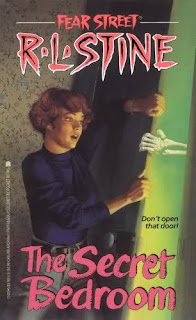
I NEVER LIKED R.L STINE BUT THIS IS THE ONLY BOOK BY HIM I "ENJOYED". IT STILL SCARES ME. SERIOUSLY.

OH' BOY. I CAME ACROSS THIS IN A FEMINIST/LESBIAN BOOKSTORE WHEN I WAS 13. I TOOK IT AND CATALOGED IT AS BASIC KNOWLEDGE. I SOON AFTER FIGURED OUT WHO ANDY WARHOL WAS AND DECIDED THAT BULLETS BESTOWED UPON HIM BY MISS. SOLANAS WHERE INDEED EARNED. ANYWAY THE BOOK IS CONTROVERSIAL AND PROVOKING.

FROM TIME TO I TIME I PICK THIS BOOK UP AND READ IT AGAIN. IT'S A TOUCHING STORY THAT CAN EASILY BECOME VISUALIZED. SOMETIMES YOU NEED TO HEAR SOMEONE ELSE'S PAST TO PUT YOUR PRESENT INTO PROSPECTIVE.

I NEVER LIKED R.L STINE BUT THIS IS THE ONLY BOOK BY HIM I "ENJOYED". IT STILL SCARES ME. SERIOUSLY.

OH' BOY. I CAME ACROSS THIS IN A FEMINIST/LESBIAN BOOKSTORE WHEN I WAS 13. I TOOK IT AND CATALOGED IT AS BASIC KNOWLEDGE. I SOON AFTER FIGURED OUT WHO ANDY WARHOL WAS AND DECIDED THAT BULLETS BESTOWED UPON HIM BY MISS. SOLANAS WHERE INDEED EARNED. ANYWAY THE BOOK IS CONTROVERSIAL AND PROVOKING.
Chimamanda Adichie: The danger of a single story
HER WORDS ARE SOME OF THE MOST ACCURATE, CANDIED, AND POWERFUL I HAVE HEARD IN A LONG TIME. I BECOME MORE APPRECIATIVE OF THESE WORDS EVERY TIME I HEAR THEM. HER WORK HAS RESONATED WITH ME FAR BEYOND WHAT I ANTICIPATED. I AM GRATEFUL I KNOW WHO THIS AMAZING WRITER IS.
Subscribe to:
Posts (Atom)